


Closing a company in Lithuania is usually carried out through a formal legal entity liquidation procedure. Company liquidation in Lithuania is a process during which business activities are terminated, obligations to creditors are settled, tax and accounting matters are completed, company documents are properly archived, and the legal entity is removed from the Register of Legal Entities. After the liquidation process is completed, the legal entity ceases to exist. Its rights and obligations are not transferred to another person or company.
Different types of legal entities can be liquidated in Lithuania, including:
- UAB (Uždaroji akcinė bendrovė) – a private limited liability company;
- MB (Mažoji bendrija) – a small partnership;
- other legal entities, provided that all legal requirements are met.
When Can a Company Be Liquidated?
Company liquidation in Lithuania is possible when the company is able to properly settle its obligations and does not have unpaid debts that prevent the completion of the closure process. Before starting the company closure procedure, it is recommended to evaluate:
- whether the company has outstanding debts to the State Tax Inspectorate (VMI), “Sodra” or other creditors;
- whether there are unfinished contracts or business obligations;
- whether the company owns any assets;
- what tax consequences may arise during the liquidation process.
If the company owns assets, possible tax implications must be assessed before distributing these assets to shareholders or members. In certain cases, transferring company assets may create additional tax obligations.
Liquidation of UAB and MB Companies in Lithuania
Liquidation of UAB in Lithuania – A UAB (Uždaroji akcinė bendrovė) can be liquidated based on a decision made by its shareholders. After the decision to liquidate the company is adopted, a liquidator is appointed. The liquidator takes responsibility for organising the entire liquidation process and performs the necessary actions required to legally close the company. From the moment the liquidator is appointed, the powers and responsibilities of the company manager are transferred to the liquidator.
Liquidation of MB in Lithuania – The liquidation of an MB (Mažoji bendrija) also begins with a decision made by the members of the partnership.
The appointed liquidator carries out all required procedures to ensure that the company is properly closed, all obligations are settled, documents are prepared, and the company is removed from the Register of Legal Entities.
What Is a Liquidator and What Are Their Responsibilities?
A liquidator in Lithuania is a person responsible for organising and managing the company closure process. After appointment, the liquidator takes over the rights and responsibilities related to the company’s management and represents the company during the liquidation procedure. The main responsibilities of a liquidator include:
- submitting required information and documents to the Register of Legal Entities;
- representing the company before state institutions;
- organising settlements with creditors;
- handling tax-related matters;
- preparing required documentation;
- ensuring proper storage and archiving of company documents;
- submitting an application for company deregistration.
Company Liquidation Procedure in Lithuania
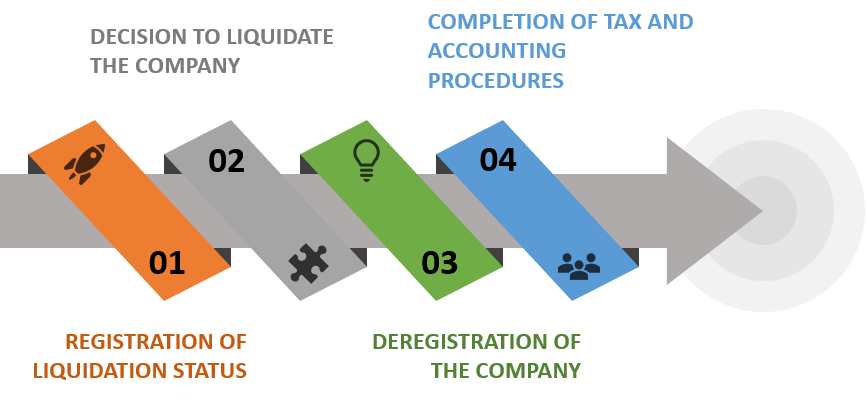
The company closure procedure in Lithuania consists of several main stages.
- Decision to Liquidate the Company – The company shareholders or members adopt a decision to start the liquidation process and appoint a liquidator responsible for carrying out the required procedures.
- Preparation of Initial Liquidation Documents – At this stage, the necessary documents are prepared, including the opening liquidation balance sheet and other information related to the company’s financial situation.
- Registration of Liquidation Status – Information about the beginning of the liquidation process is registered with the Register of Legal Entities. From the appointment of the liquidator, the previous company manager loses their authority, and the liquidator takes over the company’s representation and management functions.
- Notification of Creditors – Creditors must be informed about the beginning of the liquidation process according to the requirements established by Lithuanian law.
- Settlement with Creditors and Employees – During the liquidation process, the company must:
- terminate employment agreements;
- settle payments with employees;
- pay required taxes;
- fulfil obligations to creditors;
- complete existing contracts and commitments.
- Completion of Tax and Accounting Procedures – During the At this stage, the company must:
- submit required tax declarations;
- prepare final financial documents;
- organise and complete accounting records;
- perform all necessary accounting-related procedures required for closing the company.
Proper completion of accounting and tax obligations helps prevent delays and additional requests for information from state institutions.
- Company Document Archiving – An important part of the liquidation procedure is the proper preparation and storage of company documents. All company documentation must be organised and transferred for storage according to Lithuanian legal requirements. This may include:
- accounting documents;
- employment records;
- contracts and agreements;
- financial documents;
- other company-related records required by law.
- Closing Company Bank Accounts – After all financial settlements have been completed, the company’s bank accounts are closed and the final administrative actions related to the end of business operations are performed.
- Deregistration of the Company
The final stage of the company closure procedure in Lithuania is preparing the final liquidation documents and submitting an application to remove the company from the Register of Legal Entities. Once deregistration is completed, the company officially ceases to exist as a legal entity.
How Long Does Company Liquidation Take in Lithuania?
The duration of company liquidation in Lithuania depends on the individual situation of the company, the scope of business activities, the number of employees, company assets and existing obligations. On average, the liquidation process takes approximately 3 to 8 months.
The process may take longer if:
- the company has outstanding debts;
- disputes with creditors occur;
- accounting documents are missing;
- additional asset management or document restoration is required.
What Documents Are Required for Company Liquidation?
To begin the company closure procedure in Lithuania, the following documents and information are usually required:
- company articles of association;
- list of shareholders or company members;
- extract from the Register of Legal Entities;
- information about employees;
- opening liquidation balance sheet;
- list of creditors;
- company asset list;
- information about the accounting software used by the company;
- accounting documentation.
If some documents are missing, in many cases they can be obtained or restored where legally possible.
Company Liquidation Cost in Lithuania
The cost of closing a company in Lithuania depends on the specific circumstances of each business. Before providing an offer, we evaluate:
- the legal form of the company;
- the amount and condition of available documentation;
- the number of employees;
- company assets and liabilities;
- the condition of accounting records;
- the need for additional actions during the liquidation process.
Legal services for company liquidation start from EUR 500 net. After reviewing the company’s situation, we prepare an individual offer and recommend the most suitable solution for completing the liquidation process. Additional costs related to the procedure may include:
- Register of Legal Entities fees;
- document archiving services;
- translation services (if required);
- other necessary expenses related to the company liquidation process.
Professional Assistance with Company Closure in Lithuania
Company liquidation in Lithuania requires careful handling of legal, tax and administrative procedures. Incorrectly completed steps may result in delays and additional questions from government institutions. We provide professional company liquidation services in Lithuania for UAB, MB and other legal entities. We assist clients throughout the entire process – from preparing the decision to liquidate the company to completing deregistration from the Register of Legal Entities.
Our company liquidation services may include:
- preparation of liquidation decisions and required documents;
- performing liquidator duties;
- representation before the Register of Legal Entities, State Tax Inspectorate (VMI) and other authorities;
- preparation and submission of required documentation;
- coordination of the entire liquidation process;
- organisation of settlements with employees and creditors;
- company document archiving arrangements;
- completing the company deregistration procedure.
We help businesses complete UAB liquidation, MB liquidation and other legal entity closures in Lithuania while ensuring that all procedures are performed in accordance with applicable legal requirements.
